Why the DPDP Act matters to medtech startups
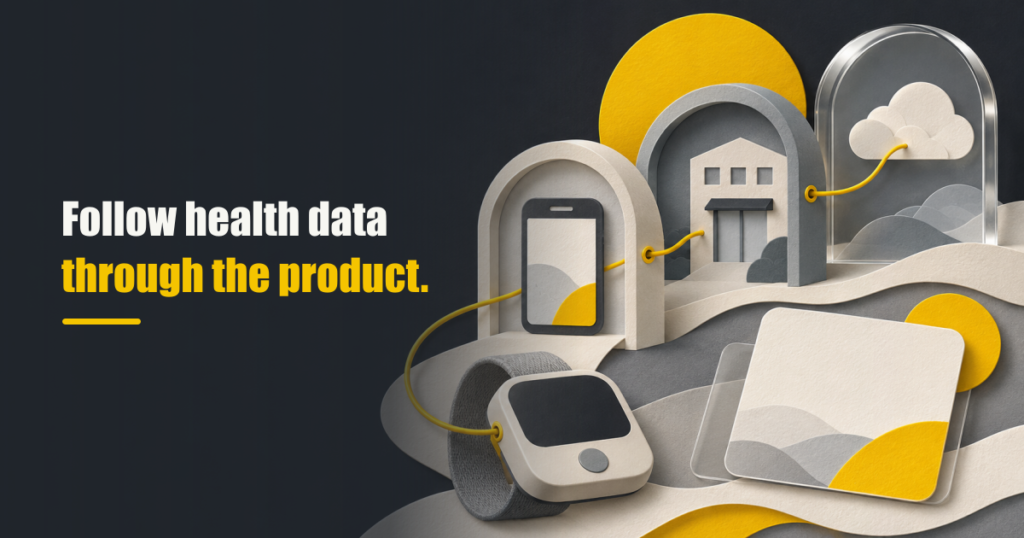
Are you building a remote-monitoring device, diagnostic app, or telehealth product? Follow one patient’s information through the product. The data may start with a symptom form, move through a device or clinician dashboard, and later appear in support logs or analytics. Each step can raise a different question about purpose, access, and responsibility.
Status checked 13 November 2026: The Act and Rules have staged commencement. The main provisions discussed here are scheduled for the eighteen-month stage from Gazette publication, rather than all being in force today. The Rules Gazette issue is dated 13 November 2025, while MeitY’s official listing shows 14 November 2025. Because these official records display different dates, this article does not treat a specific calendar date as settled. Confirm the authoritative publication date before using a date for a compliance calendar. Sources: Read the commencement notification; the consolidated Act annotation
The DPDP Act is the Digital Personal Data Protection Act, 2023. It addresses digital personal data, meaning information about an identifiable individual that is processed digitally or collected offline and later digitised. Health information that identifies, or can be linked to, a patient can be personal data under this definition. The Act does not create a separate category called “sensitive personal data,” though health data may carry high practical risks and other laws or contracts may apply. See the Act’s definitions and scope.
Draw the patient-data journey
For one product feature, map what happens to the person’s information:
– A patient enters symptoms, test results, or contact details.
– A device sends readings to the app or a cloud service.
– A clinician, lab, hospital, or support team views the information.
– A software vendor hosts, analyses, or backs up the records.
– Product analytics measure how the feature is used.
– The company retains or deletes data when the user leaves or a contract ends.
This map helps the team separate the care-related purpose from product analytics, support, billing, research, and other uses. Do not assume that a patient’s data stays within one company simply because the app has one brand.
Example: a remote-monitoring app
Imagine a patient uses a connected device at home. The device sends readings to an app, the app shows a dashboard to a care team, and a cloud provider stores the records. A support agent may later see a troubleshooting message linked to the same account. The startup should find out which entity decides each purpose, whether the care team can see the information, what the cloud provider does, and how long the readings and support records remain.
Now separate the service needed to provide monitoring from optional product analytics. If the business also wants to use usage data to improve its interface, document that purpose and the data involved. If a startup proposes to use patient information for model development or research, it should not assume that the original care purpose automatically answers the new question. Check the Act, other applicable rules, the relevant relationship, and the facts before changing the use.
Who decides, and who processes?
A Data Fiduciary decides why and how personal data is processed. A Data Processor processes data on a Fiduciary’s behalf. In one workflow, a medtech startup may decide how its consumer app uses account data. In another, it may host records strictly under a hospital customer’s instructions. The roles depend on actual decisions and processing, not only the contract label.
If a product uses artificial intelligence or automated analysis, record the input data, purpose, system access, outputs, and human review. The DPDP Act’s application still turns on its statutory scope and duties; the product’s clinical or technical label does not answer everything.
Build privacy into the product work
Before launch or a major feature change, ask:
1. What information is necessary for the feature to work?
2. Is the user told in plain language what data is used and for what purpose?
3. Which entities and vendors can access it?
4. How are access, security incidents, retention, correction, and deletion handled?
5. Does the feature involve children, clinical research, or another separate legal framework that needs its own review?
The DPDP Rules set operational requirements that commence in stages. The official notification schedules the main business-facing provisions for the eighteen-month stage; confirm the current official date calculation and any later changes before building a compliance calendar. See the commencement notification and Rules.
Do not assume every medtech startup needs a statutory Data Protection Officer. Under section 10, that appointment is required for a Significant Data Fiduciary (SDF), a Data Fiduciary or class notified by the Central Government. Other privacy ownership may still be sensible or required under a separate rule or contract.
The practical first step is a feature-level data map, an entity-role chart, and an owner for each unresolved decision. This is general information, not advice on a particular medical product or patient-data flow.
Questions for the medtech product review
– Can the feature work with fewer data fields or less precise readings?
– Is the person told which information is collected and what the feature does with it?
– Can a clinician or support worker see data that is not needed for their task?
– Are data from the device, app, clinic, lab, and cloud linked to the same person?
– What happens if the patient closes the account, replaces the device, or asks for help?
– Do vendors use the data only to provide the contracted service, or for additional purposes?
– Are the company’s DPDP analysis and any separate medical-device, clinical, health-record, or consumer obligations being reviewed together?
Frequently asked questions
Is health data automatically outside the DPDP Act?
No. If information relates to an identifiable patient and is processed digitally, it may be personal data within the Act’s definitions. The Act’s scope and any exemption still need to be checked.
Does the Act call health data “sensitive personal data”?
The DPDP Act does not create a separate category by that name. Health information can still be personal data, and it may carry high risks. Other laws, contracts, or sector rules may use different categories or duties.
Must every medtech startup appoint a DPO?
The statutory Data Protection Officer requirement applies to a Significant Data Fiduciary under section 10. It is not a blanket requirement for every startup. Check whether the government has notified the company or its class.
What should a small startup do first?
Pick one feature and follow one patient record from collection to deletion. List the purpose, systems, people with access, vendors, retention, and company decision-maker. Use that map to identify the next legal and product questions.
Primary sources: DPDP Act, 2023, sections 2, 3, 5, 6, 8, 9 and 10; DPDP Rules, 2025, as corrected by the official corrigendum; commencement notification.
Related reading: The DPDP scope test for apps and foreign services; the readiness roadmap; other industries that may process digital personal data.
This article is for general awareness and is not legal advice. Laws change and every matter turns on its facts — please seek independent counsel before acting on it.